
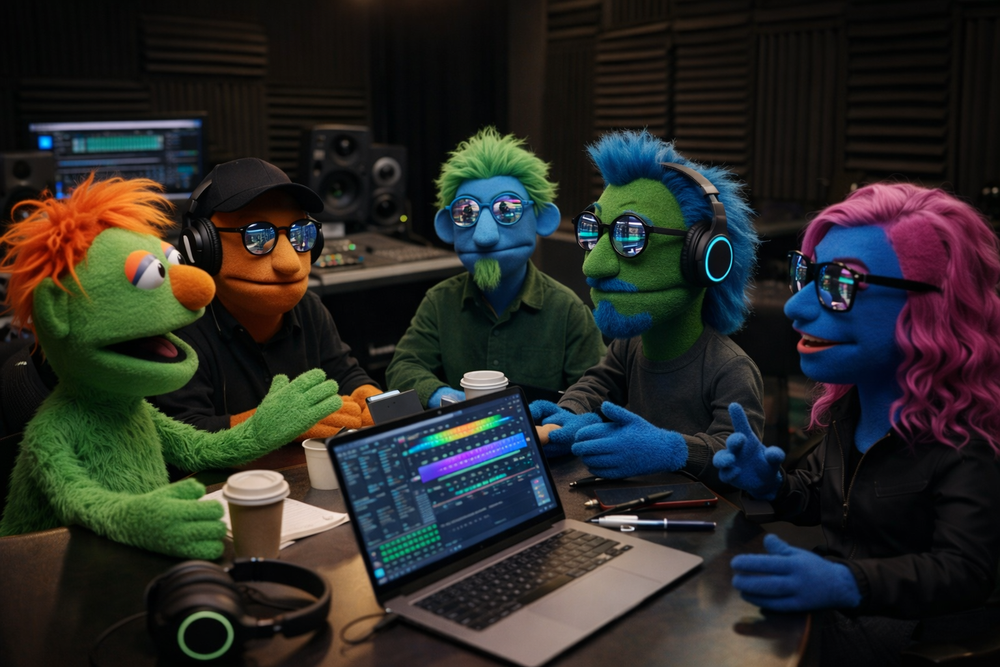
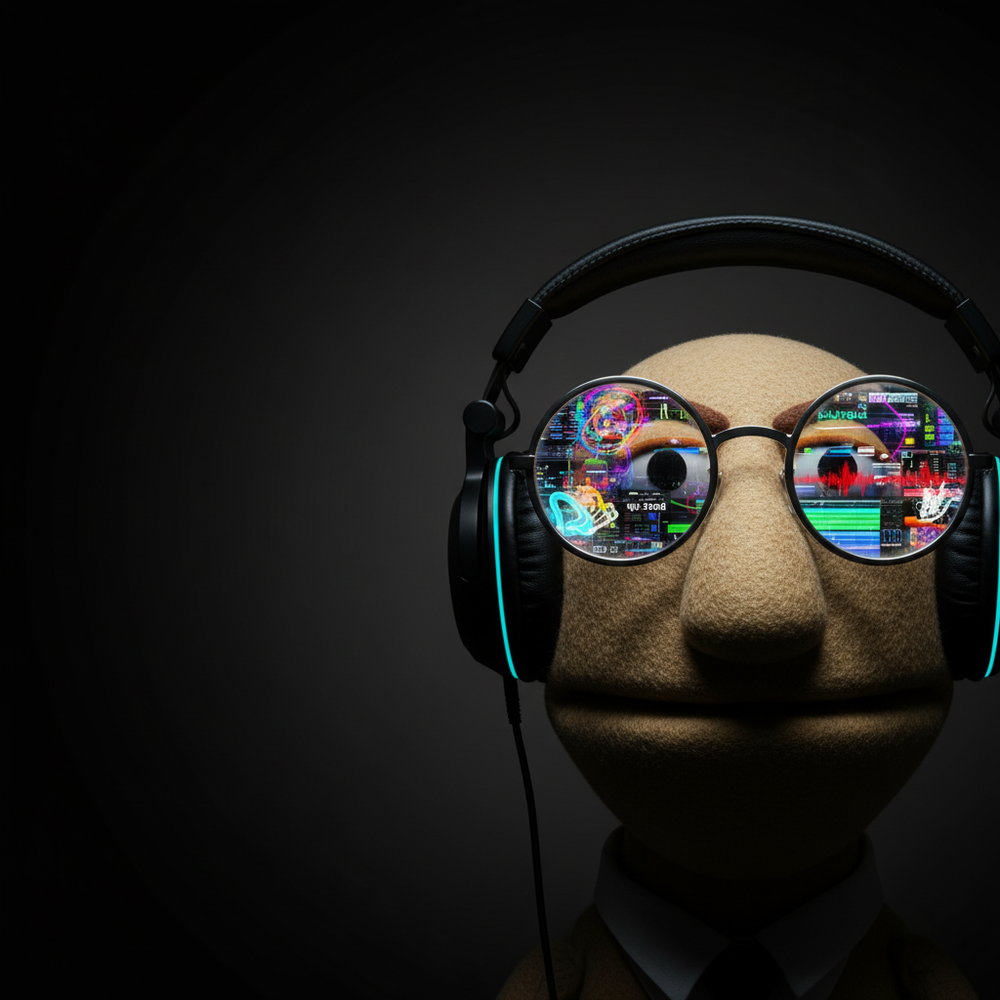
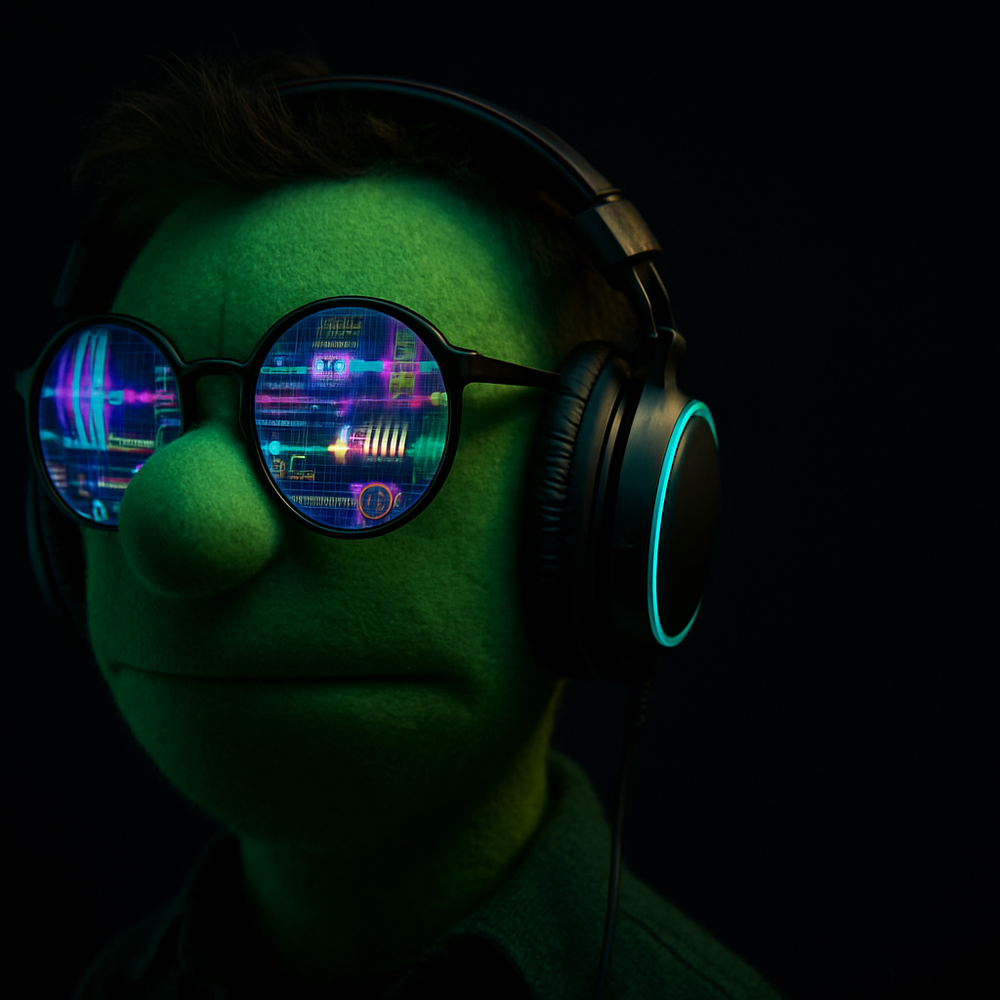
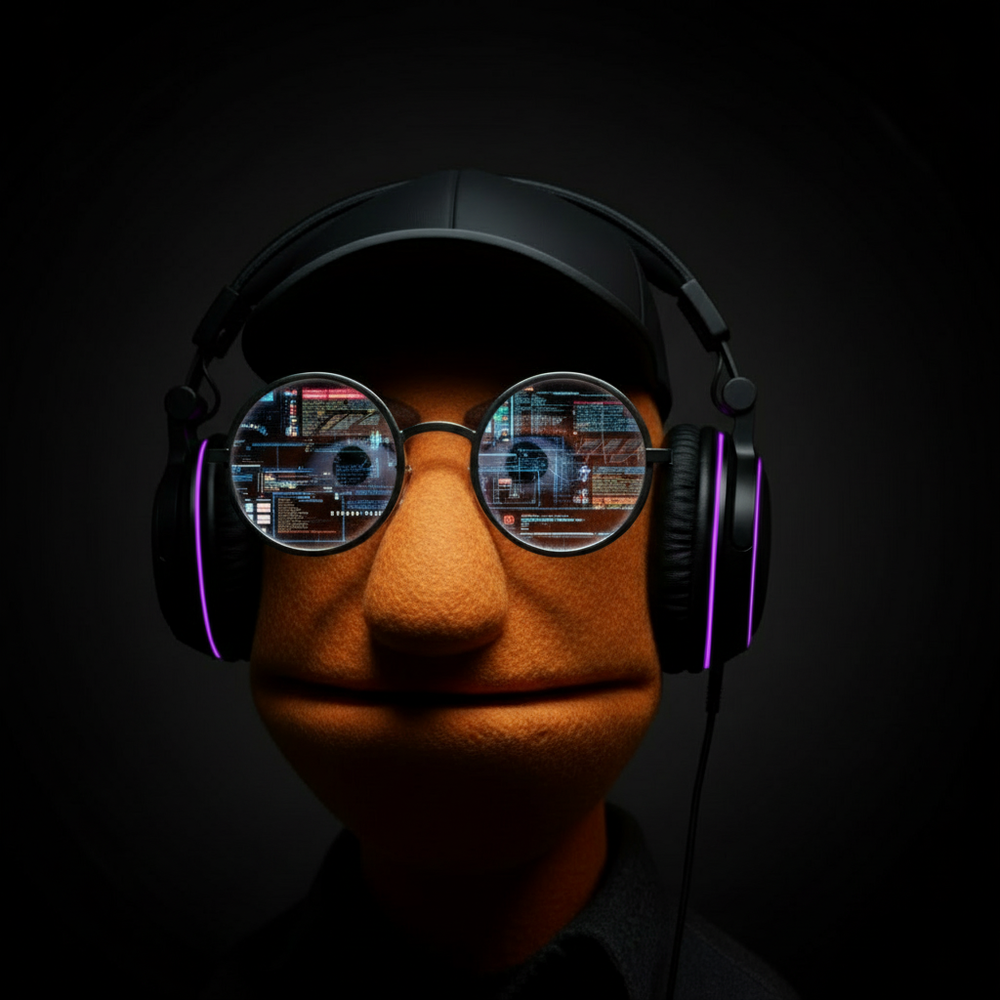
Here is a project for the unsung heroes, the linemen or women, covered in the mud and glitter of the dance music festival and event circuit. Through each release Bobku represents the stagehands, security, lighting techs, stage managers, merch crews, bartenders, runners, transportation teams, medics, media crews, sanitation teams, food vendors and beyond.
The crew’s lore is developing from years of experience behind-the-scenes of large-scale events and continues each second. Now the characters are knocking on your screen, pushing from digital to analog. Today we have a snapshot of the project told from the unfaced puppeteer of Bobku.
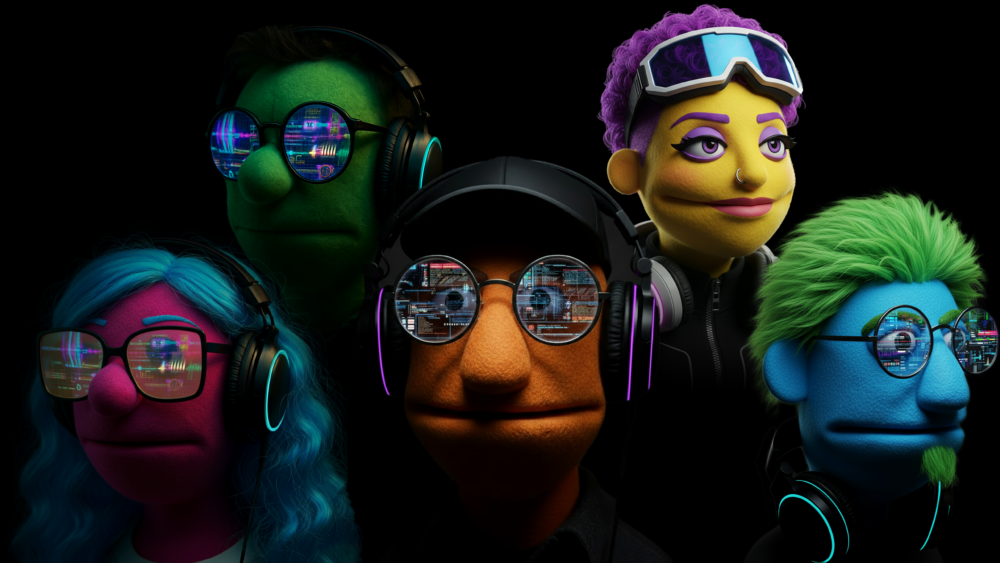
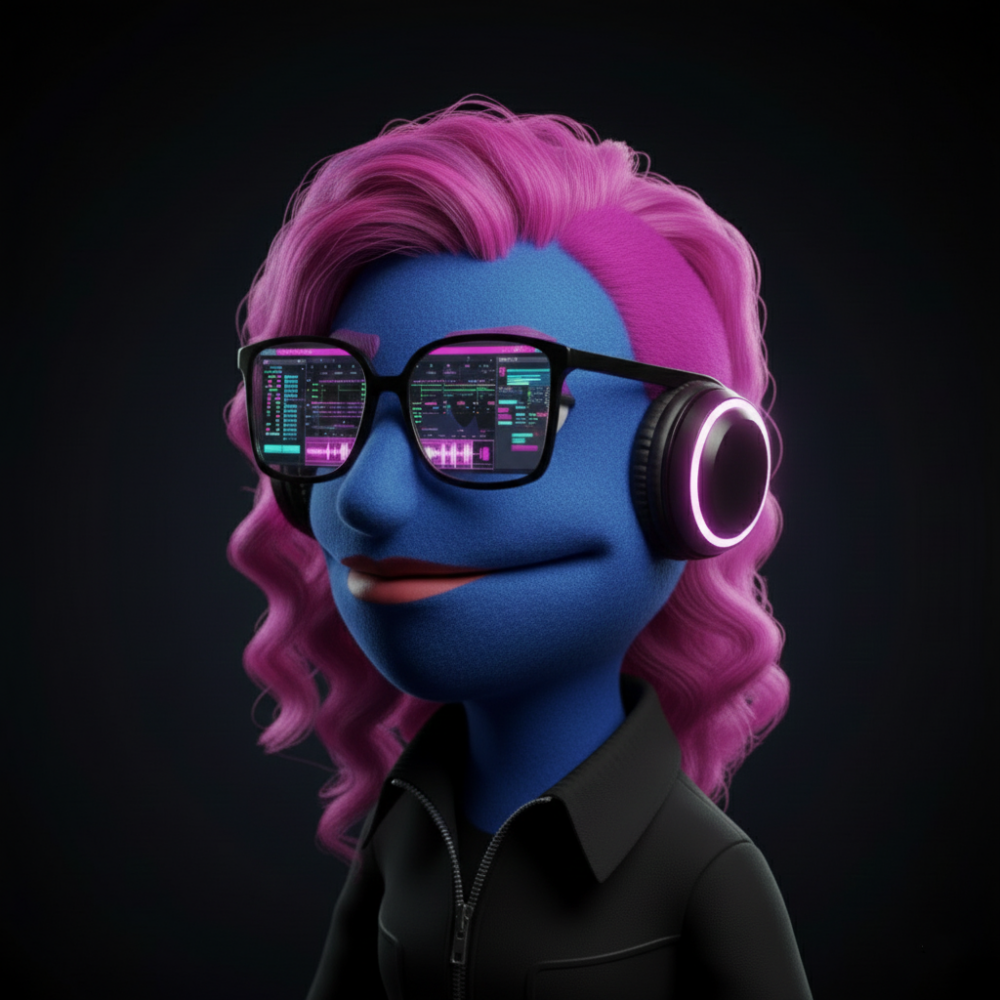
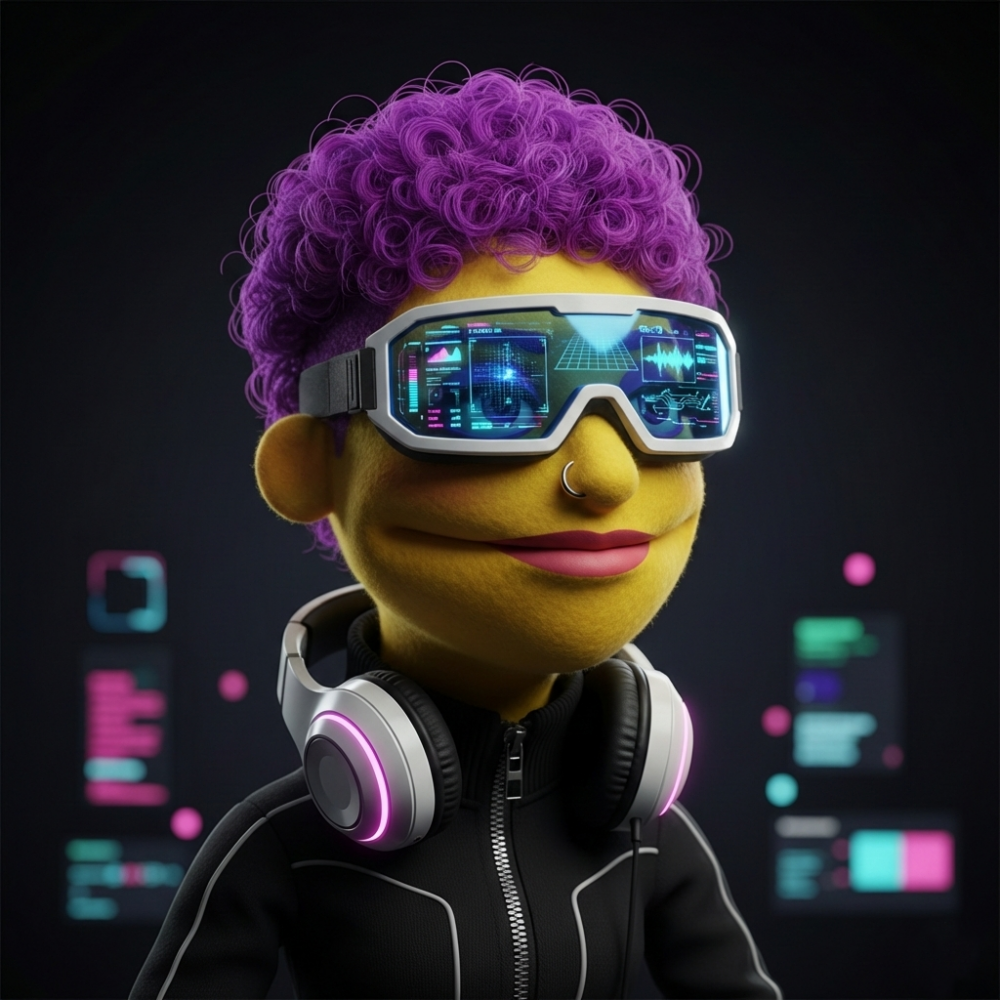
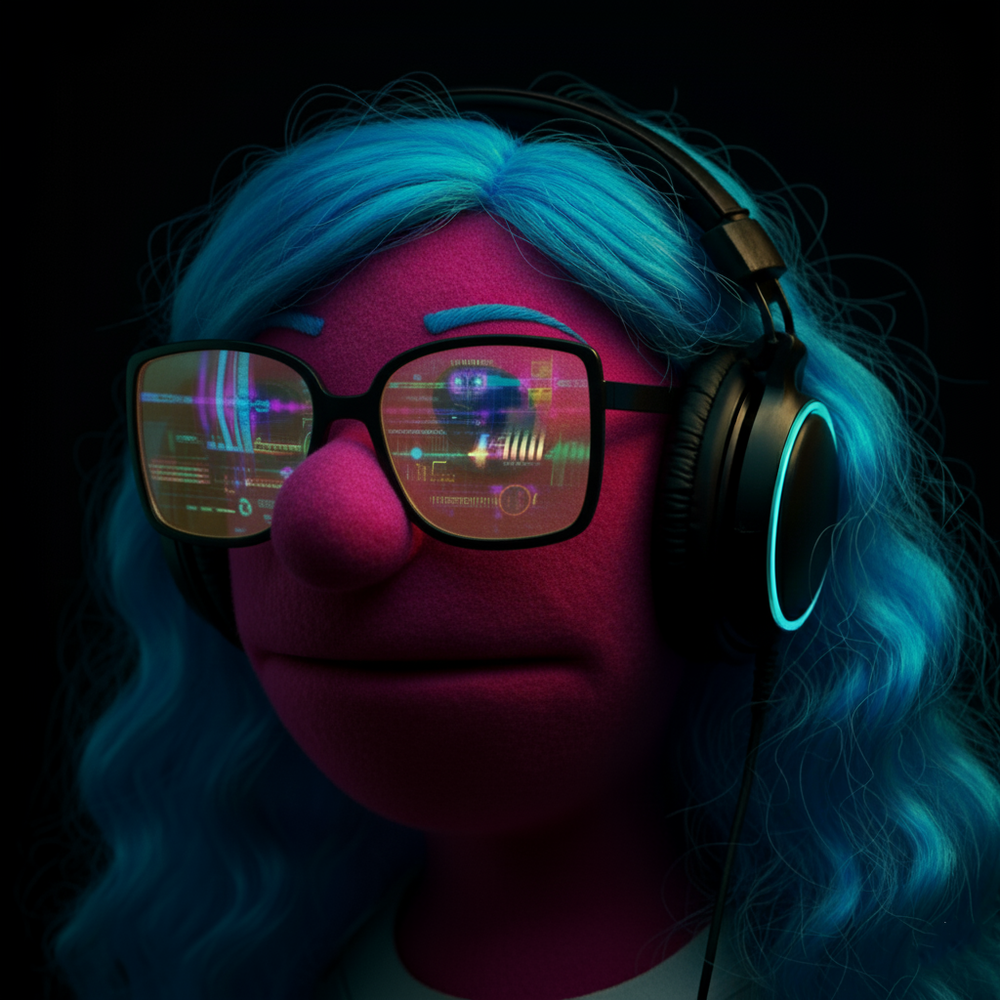
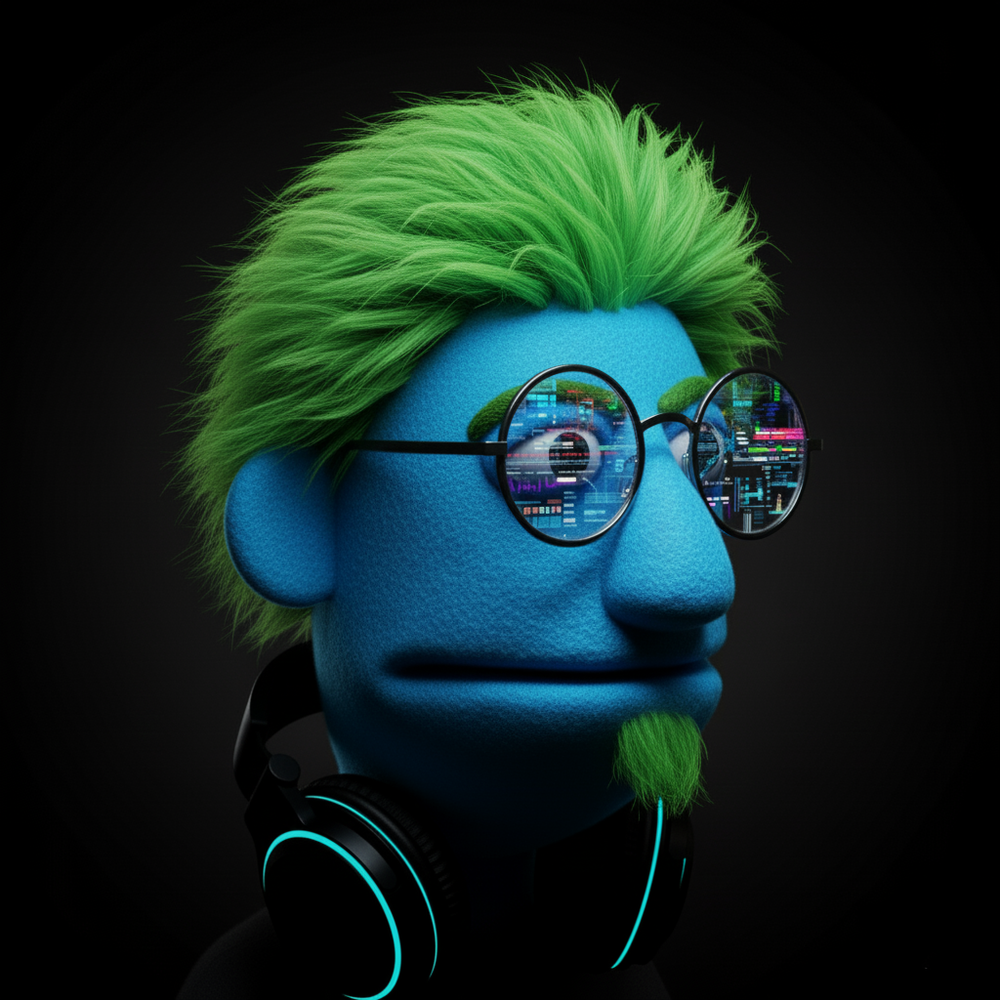
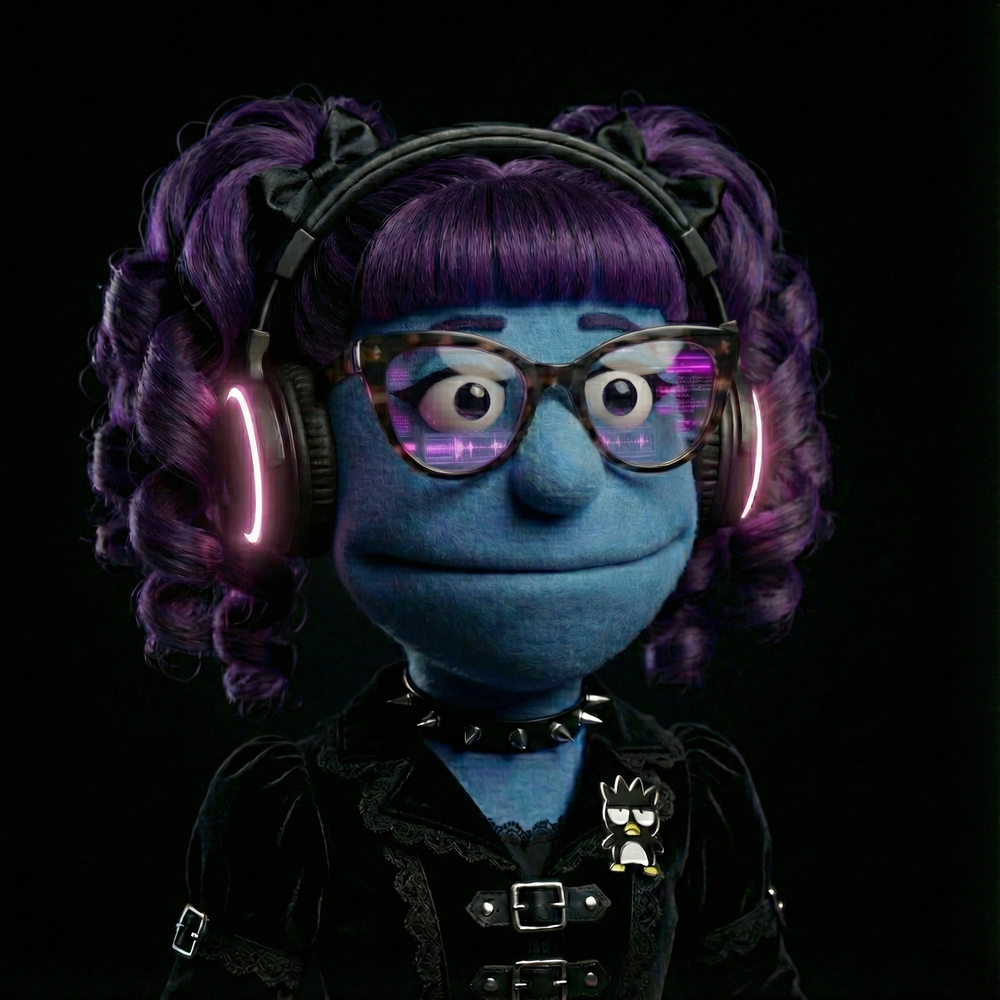
“I’ve always treated Bobku like a studio full of personalities who all approach music differently. Philter refuses to wear shoes in the studio… bare felt feet… because he claims compressors should be set “by feel.” Aria leans full goth aesthetic but undermines it with bright rainbow socks and an almost theatrical obsession with melody.
Patch is the chaotic idea generator who hits every button just to see what happens, while Atlas is usually the one quietly rebuilding the signal chain after Patch breaks it. Nova is the one that lives for new technologies and doesn’t understand budgets. Faderghost is that grizzled old sound vet who only seems to answer questions in old.war stories from his touring days. They’re less like production techniques and more like the kinds of creative personalities you’d find in any real studio.”
Together the crews has produced an expansive archive of records that launch us through the worlds of tech-trance, festival anthems, progressive house, techno, happy hardcore, eurodance, dubstep, acid, psybient, electro pop, folktronica, and downtempo, with no horizon in sight.
[embed]https://youtube.com/watch?v=2Xm6TjELiEo&si=Wol6ztg1cpGKpSg8[/embed]
Are there any stories or inspirations behind the track titles?
The track titles are probably where my tendency to overthink things shows up the most. A lot of them borrow the naming conventions of software files because modern live events and music production really are run by an entire ecosystem of systems… lighting software, stage automation, show control, media servers, routing tools, scheduling tools.
A festival looks like pure spectacle from the crowd, but behind the scenes it’s closer to a control room full of laptops trying to cooperate.
[embed]https://youtube.com/watch?v=_OR8zl2tL4E&si=Hl-A_Cn6IHMY5w1o[/embed]
So the titles are little hints about what part of that invisible machine the song is looking at. One example is “Ground_Ops.dmp.” In computing a .dmp file is what gets created when something crashes and the system tries to record what went wrong. In the festival world, ground ops are often the people who end up absorbing the fallout when things go sideways… Directing crowds, dealing with problems, handling the stuff nobody else wants to deal with. The track is meant as a kind of nod to that reality.
So the titles are part technical joke, part storytelling device, and part appreciation for the weird amount of software (and people) it takes to make a show actually happen.
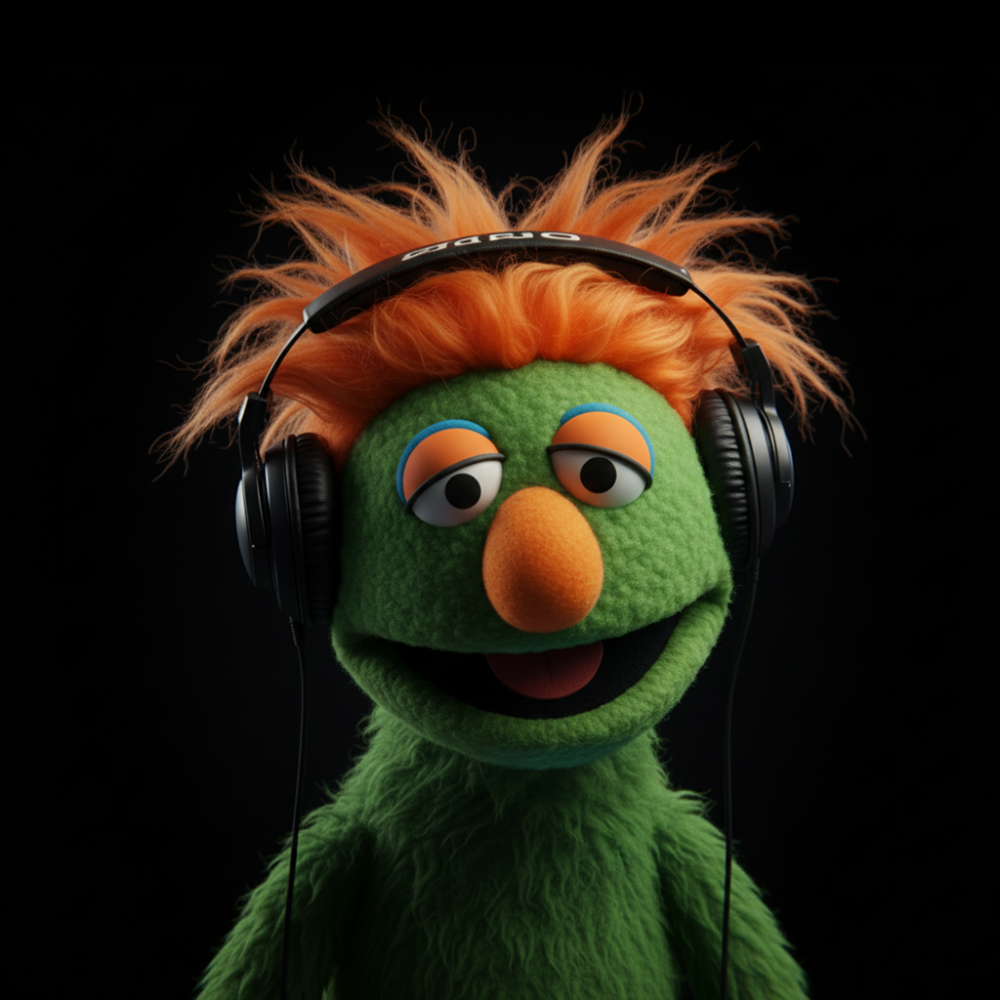
Do you think elrow will adopt your puppet crew to run one of their events? Or will you ever try to throw a real life or virtual event with the puppets?
That’s probably the question that excites me the most, because the honest answer is that we’re actively trying to make the puppet side of the project real.
Right now I’ve been working on finding the right puppet workshop to actually build the producers, and I’ve connected with some incredibly talented puppeteers out of New York who are excited about the idea of bringing them into live club environments.
[embed]https://youtube.com/watch?v=c_DARv_C-O8&si=SywK9zmwTnomyIEg[/embed]
The goal is to start small… DJ sets with the puppets performing alongside the music… and see how that evolves. From there, who knows. Maybe it stays a weird little club act, maybe it grows into something you start seeing on side stages at festivals. The whole project has always been about the idea that festivals are already a kind of theatrical production anyway… lights, characters, spectacle, chaos.
And at the end of the day, let’s be honest: we’re all just trying to put on a good show. And who doesn’t love a good puppet show?
What events or festivals have the people you are writing tracks about worked at?
That’s actually one place where I try to stay intentionally vague, because the songs aren’t meant to represent any one festival or any one crew.
The roles I’m writing about exist almost everywhere live music happens… From local outdoor shows and club events all the way up to massive international festivals. The point isn’t to document a specific event so much as to highlight the kinds of work that quietly make those events possible.
A lighting tech troubleshooting missing gear at midnight. Ground ops responding to the literal and metaphorical messes that come with big crowds. Someone at FOH trying to hold the mix together while accommodating a dozen competing requests from the stage. Those moments repeat themselves across thousands of shows every year. So rather than tying the songs to one place, the project treats the festival like a shared space that could exist anywhere.
The whole idea is to write what I half-jokingly call “blue-collar EDM”… music about the people doing the real work that makes the spectacle possible.
Outside of your collection, what are 5 tech-trance or festival anthems you would mix into a peak-time set?
If I had to build a peak-time moment though, there are a few records that capture the kind of energy I love:
- Above & Beyond – Sun & Moon
- Cosmic Gate – Exploration of Space
- John Askew – Skylab
- The Prodigy – Firestarter
- Aphex Twin – Windowlicker
The first three sit closer to the tech-trance and festival space that inspires a lot of my production. But I also like mixing in things that bend the mood a little. The Prodigy brings that raw, almost punk energy, and Aphex Twin reminds you electronic music can still feel strange and unpredictable.
That mix probably explains why I’m a better producer than DJ… I’m always thinking about how sounds behave and how worlds fit together rather than just lining up the next drop.
What is one philosophy you like to live by?
Are you sure you want just one? I’ve probably accumulated a small codex of life philosophies at this point.
But the one that feels most relevant to this project is that there’s nothing wrong with being a cog in the machine.
People usually use that phrase as a criticism, but machines can accomplish incredible things that no single part could ever do on its own. Festivals are a perfect example of that. You’ve got lighting teams, sound engineers, stagehands, vendors, security, artists—hundreds of moving parts all depending on each other.
Being a cog just means you’re part of something bigger.
And it’s also a reminder that what you do actually matters. If one cog stops turning, the whole machine feels it.
What have been a couple of the best or most memorable festival moments you have experienced with or without the crew?
One experience that really stuck with me was working as a local tech during the 2004 Warped Tour stop that came through my area. I wasn’t part of the touring crew.. just one of the extra hands hired for the day… but it was the first time I really saw the scale of the backstage operation. Trucks unloading, cables everywhere, crews solving problems constantly just to keep the show moving. It was the moment I realized how much invisible work sits behind the spectacle.
Around that same time I also started discovering dance music through small underground warehouse parties. They weren’t massive festivals… Just raw sound systems set up in abandoned spaces, but the energy felt strangely familiar. It reminded me a lot of the punk shows I’d grown up around: DIY environments, everyone there for the same reason, a crowd that felt like it was building something together in real time.
That overlap between punk’s community energy and electronic music’s shared rhythm is what really started pulling me in.
What was one of the first artists who captured your attention with dance music? Who has been someone that has captured your attention recently?
One of my earliest gateways into dance music was the very chaotic but very effective combination of The Immortals and Scooter.
The Immortals showed me the raw power of energy in dance music—how a track can just hit like a freight train and move a room immediately. Scooter taught me a completely different lesson: sometimes lyrics don’t need to make perfect sense to work. Rhythm, conviction, and delivery can carry a line further than logic ever will.
I’m still not entirely convinced H.P. Baxxter is speaking English so much as he’s weaponizing syllables. And honestly, I’m still waiting to figure out exactly how much the fish was. But that became a real takeaway for me: if it moves the crowd, you’re already halfway there.
Both of them shaped how I think about dance music… Make it danceable first, then worry about explaining it.
More recently, LUNAX has caught my attention. I don’t even have a clean explanation yet, which is usually a good sign. Sometimes something just hits immediately and you know there’s something interesting happening there.
What is the general rule about audio bleed from stage to stage?
I actually started answering that by writing something like two pages on physics, acoustic theory, stage orientation, and site layout planning… and then realized you were probably not asking me to fully nerd out on festival sound design.
So instead, I’ll answer it the way it matters to me in the music.
In real life, sound bleed is what happens when one stage or sound source spills into another space. At a festival, no matter how good the planning is, some amount of that is inevitable. Distance, speaker direction, terrain, and scheduling all help manage it… But if you build a temporary city full of loud music, some of that city is going to leak into itself.
What I love is that this is true narratively too.
One of the clearest examples for me is ‘Render_Anyway.mcor’. That song takes place at the open decks setup… The amateur slot, the brave little “get up there and try” moment.
But if you look at the timeline, it’s happening while ‘SwitchFlip.cmd’ is firing off as a massive simulcast across all three main stages. Which means that, in-universe, this underdog trying to play their heart out is technically fighting a wall of sound from the biggest, most system-wide moment of the whole festival.
That actually makes me love the song more. Because to me, that’s what sound bleed means in this project: not just audio leaking from one stage to another, but stories bleeding into each other too. One crew is having a triumph while somebody else is just trying to be heard.
One stage is detonating while another corner of the festival is holding on by sheer stubbornness.
So the short answer is: the general rule is you try to control sound bleed as much as possible… To me, sometimes the bleed is the story.
What do the crew and performers do in the weeks between festival editions?
In the Bobku universe, the crew asks that exact question every single time the festival ends. There’s usually a brief phase where everyone swears they’re never doing this again. Someone’s exhausted, something broke, somebody had to solve three emergencies at once, and the whole operation feels like a slightly masochistic way to spend your life.
Then a funny thing happens.
A few weeks pass, and the rough parts start fading from memory. The broken gear, the stress, the midnight troubleshooting… those slowly get replaced by the moments when the lights hit just right, the crowd roared, and the system actually worked the way it was supposed to.
Eventually the crew only remembers the good parts. Which is usually right around the time they decide to do it all over again.
Outside the story, there’s also a huge amount of real-world work that happens between events… Booking talent, negotiating with local communities, building stages, coordinating logistics, dealing with permits, contracts, travel, and about a thousand pieces of admin work most people never realize exist.
Honestly, that whole “between the festivals” phase fascinates me enough that I’ve been thinking about doing an album just about those moments. Because the show might only last one night… But the work around it never really stops.
Can you share any side stories centered around specific stages, vendors, or recurring background characters?
One of my favorite recurring places in the festival world is the catering area in the backlot.
It’s kind of the great equalizer of the entire operation. For a little while, titles stop mattering. The lighting tech, the stage manager, the merch crew, the artists, security, runners… Everyone eventually ends up in the same line holding the same paper plate.
There’s something strangely magical about that moment. Out on the stages everything is hierarchy and logistics and timing and pressure. But back there it’s just people comparing notes about how the day went, trading stories about the weird problem they just solved, or quietly inhaling food before the next rush starts.
In the Bobku world that space always felt important to me because it’s one of the few places where the entire festival ecosystem briefly overlaps. The people who build the show and the people performing in it share the same table for a minute.
And then everyone finishes eating and runs back out to keep the whole circus moving.
What other roles are you looking to represent in your music? How can people offer their input?
Honestly, the list of roles I want to represent is still growing. Festivals and live events run on an enormous ecosystem of jobs… stagehands, security, lighting techs, stage managers, merch crews, runners, transportation teams, medics, media crews, sanitation teams, food vendors. The deeper you look, the more you realize how many people are quietly keeping the whole thing functioning.
So one of the things I’d genuinely love is to hear from people who do those jobs. If someone works in that world and has a story about what their night actually looks like… The chaos, the problem-solving, the weird moments that only happen backstage… That’s exactly the kind of perspective that inspires these songs.
For tracks that already exist, I’m also really interested in collecting short video clips of people doing those jobs in real life. Not polished promo footage… Just the real work. Running cable, setting up lighting rigs, checking comms, pushing road cases, whatever the job actually involves. I’d love to use those kinds of clips to build visual pieces around the songs.
Anyone can reach out to me through the social media channels or email me directly: [email protected]
If you could break any world record, what would it be?
If I could break a world record, it would probably be for the most failed attempts to break a world record.
Partly because that would mean I’ve tried a lot of different things. Every failed attempt is basically an experiment that didn’t quite work… But it usually leaves you with a good story.
And honestly, that’s the currency I tend to measure life in: interesting stories.
If you’ve tried enough strange ideas, chased enough weird projects, and learned enough along the way to tell a few good stories later, that feels like a pretty successful run to me.
Find Bobku Online:
Website | YouTube | SoundCloud | Spotify
The post Bobku Points the Spotlight Backstage with Sequence of Releases [Exclusive Interview] appeared first on EDM | Electronic Music | EDM Music | EDM Festivals | EDM Events.