




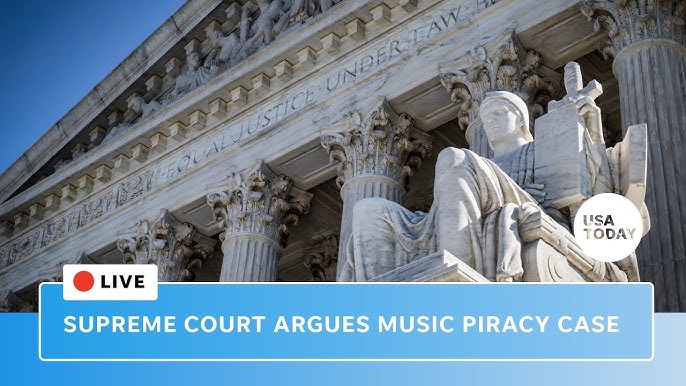
The Supreme Court Piracy Case, Cox Communications v. Sony Music Entertainment, et al., has major implications for the future of internet access and copyright law. The U.S. Supreme Court recently accepted this high-stakes dispute. At the heart of the case is whether internet service providers (ISPs) can be held liable for “contributory infringement.” This means they knowingly facilitated or failed to prevent their users from repeatedly pirating copyrighted music.
The Core Dispute: $1 Billion Damages and ISP Responsibility
Major record labels, including Sony Music, Universal Music Group, and Warner Music Group, initially filed the lawsuit in 2018. It targets telecom giant Cox Communications. The labels accuse Cox of failing to respond adequately to thousands of notices. These notices documented repeat copyright infringement by subscribers involving over 10,000 songs.
The legal battle centers on the Digital Millennium Copyright Act (DMCA) and its “safe harbor” provisions. The music industry argues Cox forfeited its DMCA protection. They claim Cox failed to maintain a “reasonable and appropriate” system to deal with repeat infringers. The labels presented internal Cox communications as evidence of willful disregard. This included an employee email stating “F the DMCA!!!“.
A Virginia jury initially sided with the labels, awarding a staggering $1 billion in damages in 2019. An appeals court partially upheld this ruling, prompting Cox’s appeal to the Supreme Court.
Contributory Infringement in the Supreme Court Piracy Case
Contributory infringement forms the core legal question: Did Cox knowingly contribute to piracy? The labels assert that Cox became complicit. They argue Cox ignored “smoking gun” evidence (the infringement notices) and failed to terminate repeat offenders.
Cox, on the other hand, argues that:
- They are not Internet Police: Holding ISPs liable for their customers’ actions would turn them into internet police. They argue this would cause “havoc” with the essential medium of public commerce and speech.
- No Intent to Foster Piracy: Cox maintains it did not “aid, foster, encourage or profit” from the illegal conduct, and contributory liability requires an intent to foster the bad act.
- Mass Disconnection Risk: They warn that upholding the lower court ruling could lead to mass internet-account terminations. This affects entire households, businesses, or universities based on unproven accusations.
Supreme Court justices have debated the practicalities. They are weighing the burden on ISPs to investigate every notice against the risks of encouraging lax enforcement. The ruling, expected by June 2026, will significantly impact copyright enforcement across media and online services.
Source: Billboard Pro, Supreme Court Weighs $1B Music Piracy Case.

The post $1 Billion Music Piracy Lawsuit Reaches Supreme Court, Testing ISP Liability appeared first on EDMTunes.